The infrastructure challenges of mountain living are most visible in winter, but they extend through every season in communities built around terrain and altitude. Year-round residents of Canadian mountain towns deal with service realities that their counterparts in flatland cities rarely encounter: hospitals that handle helicopter transfers more routinely than most urban facilities, highways that close for avalanche control in the middle of weekday mornings, school buses that navigate mountain passes in February, and utilities that must withstand temperatures well below -20°C for extended periods. How these communities manage these challenges varies by location, funding, and the particular character of each place.
Healthcare in Mountain Communities
Access to healthcare is one of the first questions that prospective mountain residents ask, and the honest answer is that it varies considerably. Banff has Mineral Springs Hospital, a small acute-care facility operated by Covenant Health that provides emergency services, basic surgery, and some inpatient care. It is staffed year-round, though physician recruitment to remote locations is a well-documented challenge for small Canadian communities, and specialist services typically require a transfer to Canmore (Canmore General Hospital) or Calgary.
Canmore General Hospital provides a broader range of services and is an important regional resource for the Bow Valley corridor, serving both Canmore and Banff residents. Emergency transfers from Banff or more remote locations within Banff National Park can involve ground ambulance or STARS (Shock Trauma Air Rescue Service) helicopter, depending on the nature and urgency of the situation. STARS operates out of Calgary and Lethbridge and provides air transport in Alberta's mountain regions.
Whistler, British Columbia, is served by Whistler Health Care Centre, a facility that handles emergency care, minor surgery, and outpatient services. More complex cases require transfer to Squamish or Vancouver. The Sea-to-Sky corridor between Whistler and the lower mainland presents its own access challenges during severe weather, and the BC Ambulance Service maintains resources in the Whistler area to manage this.
The relationship between mountain hospitals and helicopter services is not a specialty arrangement — it is a routine component of emergency care in alpine settings. Residents in remote mountain areas should factor this into their assessment of healthcare proximity.
Transportation and Road Maintenance
The Trans-Canada Highway through Banff National Park is a federal responsibility, maintained by Parks Canada in partnership with Alberta Transportation. It is kept open year-round, but avalanche control operations along sections of the highway — particularly near Rogers Pass in British Columbia, and in sections of the park itself — lead to regular temporary closures, sometimes lasting several hours. These closures are managed and communicated through official channels (511 Alberta, DriveBC), and residents who depend on the highway learn to plan around them.
Highway 93, the Icefields Parkway connecting Banff and Jasper, is also maintained year-round but closes seasonally between Banff and Lake Louise for portions of the year for wildlife management purposes. The Sea-to-Sky Highway (Highway 99) connecting Whistler to the lower mainland is maintained by the BC Ministry of Transportation and is subject to weather-related closures and delays during winter storms.
Local roads within mountain municipalities are maintained by town or municipal public works departments. Snow removal in mountain towns operates on tight schedules — residents in Banff, Canmore, and Whistler generally receive snow removal service within defined windows following significant snowfall events. Gravel roads and private access roads in rural mountain areas may not receive the same level of maintenance, and responsibility can fall to property owners or strata corporations.

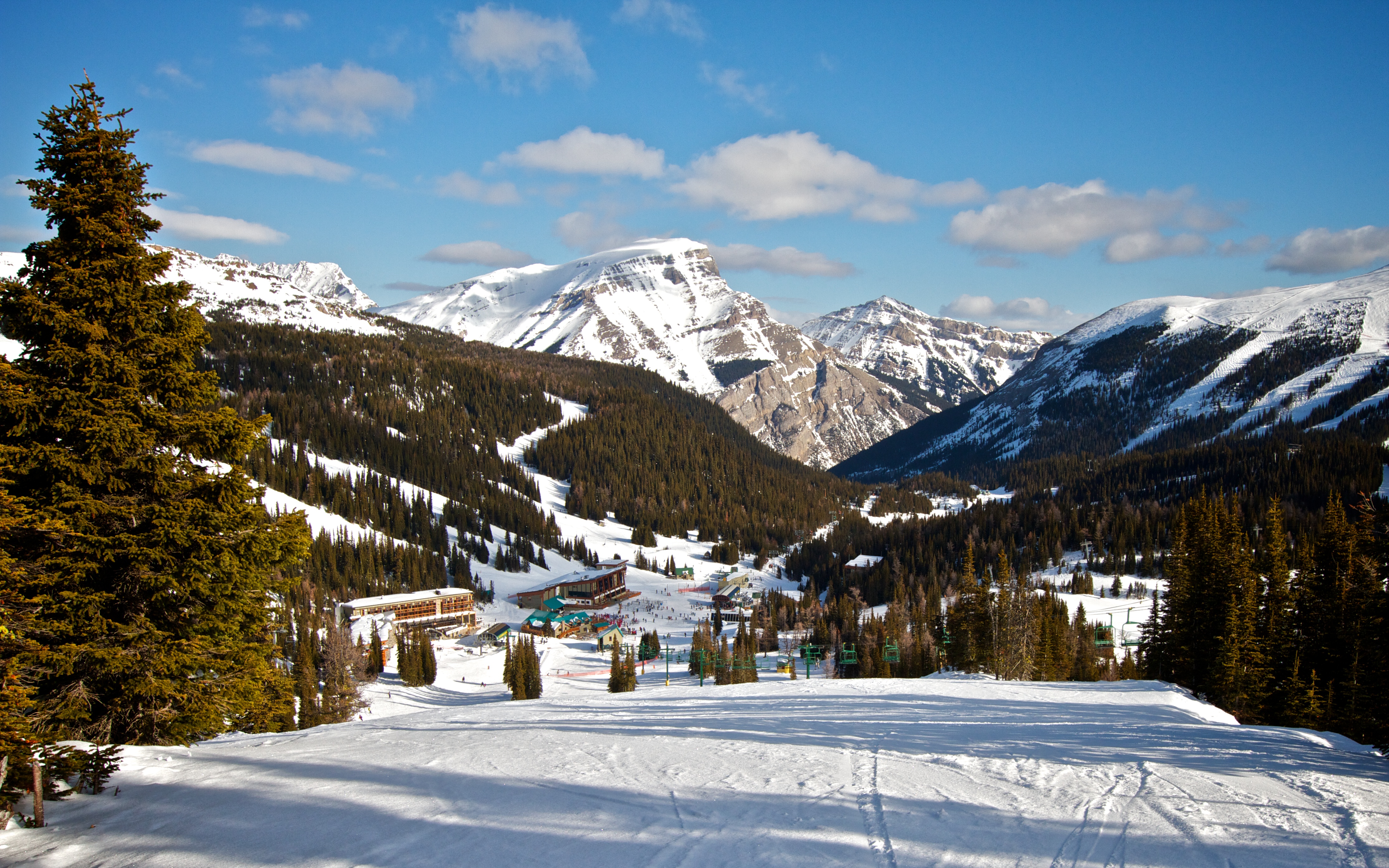
Lake Louise Ski Resort, Alberta — one of three ski areas operating within Banff National Park, with seasonal infrastructure requirements that inform broader community planning.
Education and Schools
Mountain communities have functioning schools, though the options differ from urban centres. Banff is served by schools within the Canadian Rockies Public Schools district and the Palliser Regional Schools Catholic system, providing K-12 education within the townsite. School buses navigate mountain roads in winter, and the school calendar is the same as the rest of Alberta.
Canmore has a broader school infrastructure given its larger population, with multiple elementary and secondary options. Post-secondary education requires travel to Calgary for most programs; some distance learning options through Alberta post-secondary institutions are available but not equivalent to on-campus programs in a full university setting.
In smaller mountain communities and rural areas, educational options are more limited. Some families in very remote settings rely on provincial distance learning programs through the Alberta Distance Learning Centre or its BC equivalent. French immersion programs are available in some mountain communities but not all, and specialty programs common in larger urban centres are generally not available locally.
Utilities and Connectivity
Mountain communities rely on regional utility providers for electricity and natural gas. ATCO Electric serves many rural Alberta communities including some in mountain areas, while FortisAlberta serves others. In British Columbia, BC Hydro provides electricity to most communities including Whistler. Natural gas service in remote areas is sometimes unavailable, and residents may rely on propane or electric heating instead.
Water and sewer service in incorporated mountain towns (Banff, Canmore, Whistler) is municipal, generally reliable, and treated to potable standards. Rural properties and some smaller communities rely on wells and septic systems that require maintenance and are more sensitive to seasonal conditions. In some mountain areas, groundwater quality and well performance can be affected by snowmelt volumes and dry-season conditions.
Internet connectivity in mountain communities has improved considerably but varies. Major incorporated towns typically have high-speed internet access through cable or fibre providers. Rural and backcountry areas may have limited options, with satellite internet now providing an alternative in locations where fixed-line providers have not reached. Cellular coverage on mountain highways can be intermittent, particularly in national park areas where tower placement is restricted.
Emergency Services and Mountain Rescue
Municipal emergency services in mountain towns — fire, police, and paramedics — operate year-round. RCMP detachments serve most mountain communities in Alberta and BC, with the exception of Banff, which has its own RCMP detachment sized for the visitor volume the town handles.
Mountain rescue is a distinct category. Parks Canada maintains a specialized Visitor Safety team in Banff National Park that conducts technical rescues from avalanche terrain, cliff faces, and backcountry locations. This team operates year-round and is considered among the most experienced mountain rescue operations in North America. In BC's mountain parks, BC Parks and Parks Canada coordinate rescue efforts depending on jurisdiction.
The existence of well-resourced mountain rescue capabilities does not eliminate the risk of incidents in backcountry terrain — it provides a framework for response when incidents occur. Year-round mountain residents generally develop their own awareness of local terrain, avalanche conditions (tracked through Avalanche Canada and Parks Canada), and the limitations of emergency response in remote settings.
Year-round life in a mountain community is sustained by a layer of infrastructure and service that often goes unnoticed during good weather and peak season. It becomes visible when a highway closes mid-morning for avalanche control, when a patient needs air transfer to a city hospital, or when a school bus navigates a freshly plowed mountain road on a February morning. That these systems function reliably in most circumstances is a reflection of sustained investment and operational attention — and an important part of the practical reality of mountain living in Canada.
Last updated: June 12, 2026